Clones

11 machines

European and Ukrainian machines built “after” the Spectrum. Cleanly-licensed photos are scarce — some machines are still looking for their photo.

Draft: the museum verifies the list and attribution of clones against its inventory before publishing. Years and origins may be refined.

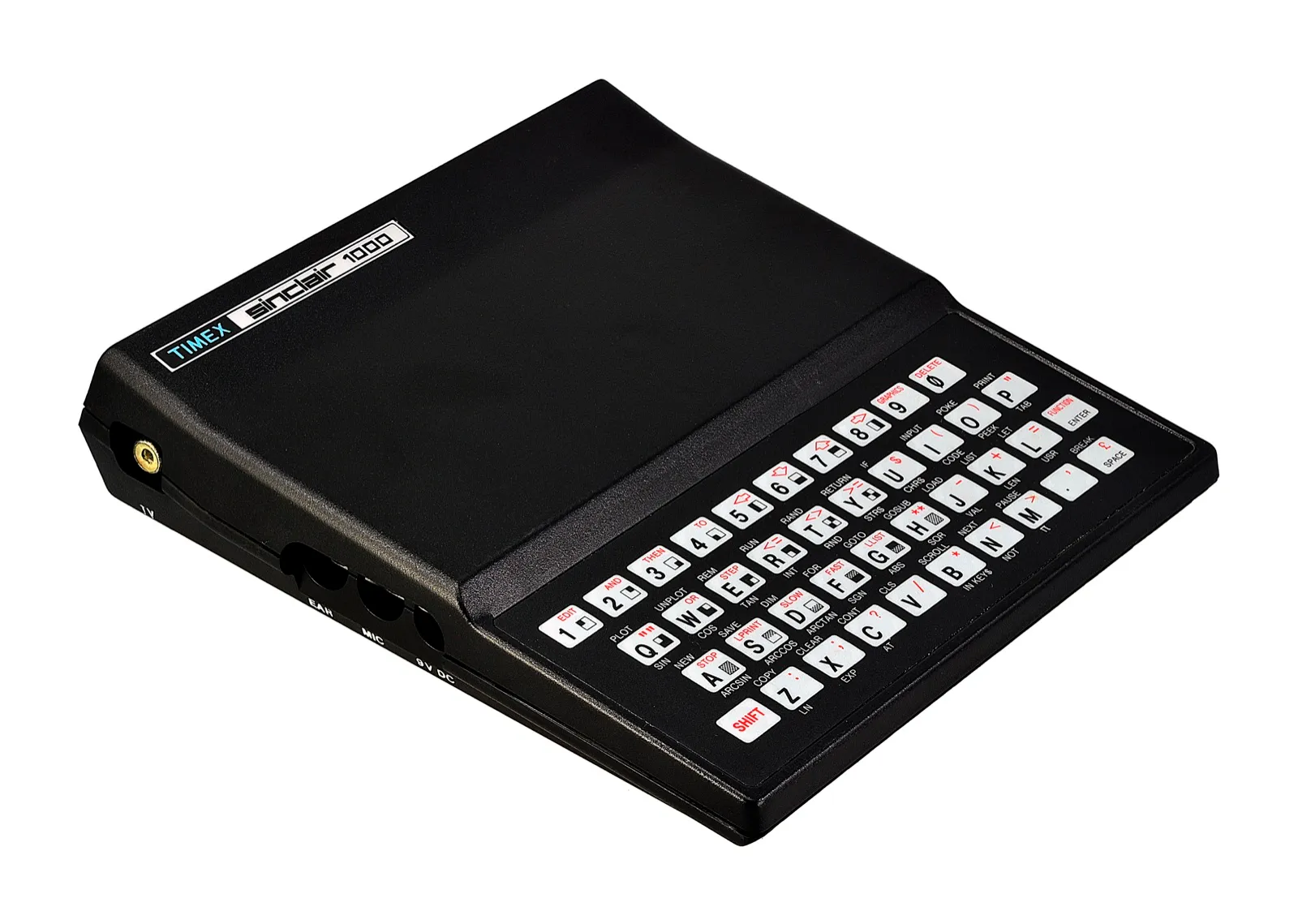
Timex Sinclair 1000 — a small black wedge-shaped case with a flat membrane keyboard, front-right view
Marco Tangerino · Public domain · Wikimedia Commons
★ In museum
1982

Timex Sinclair 1000

Timex Corporation · USA

The American licensed version of the ZX81 (Timex-Sinclair): a Zilog Z80A, 2 KB RAM, monochrome block graphics and no sound. Timex-Sinclair’s first home computer, priced at $99.95.
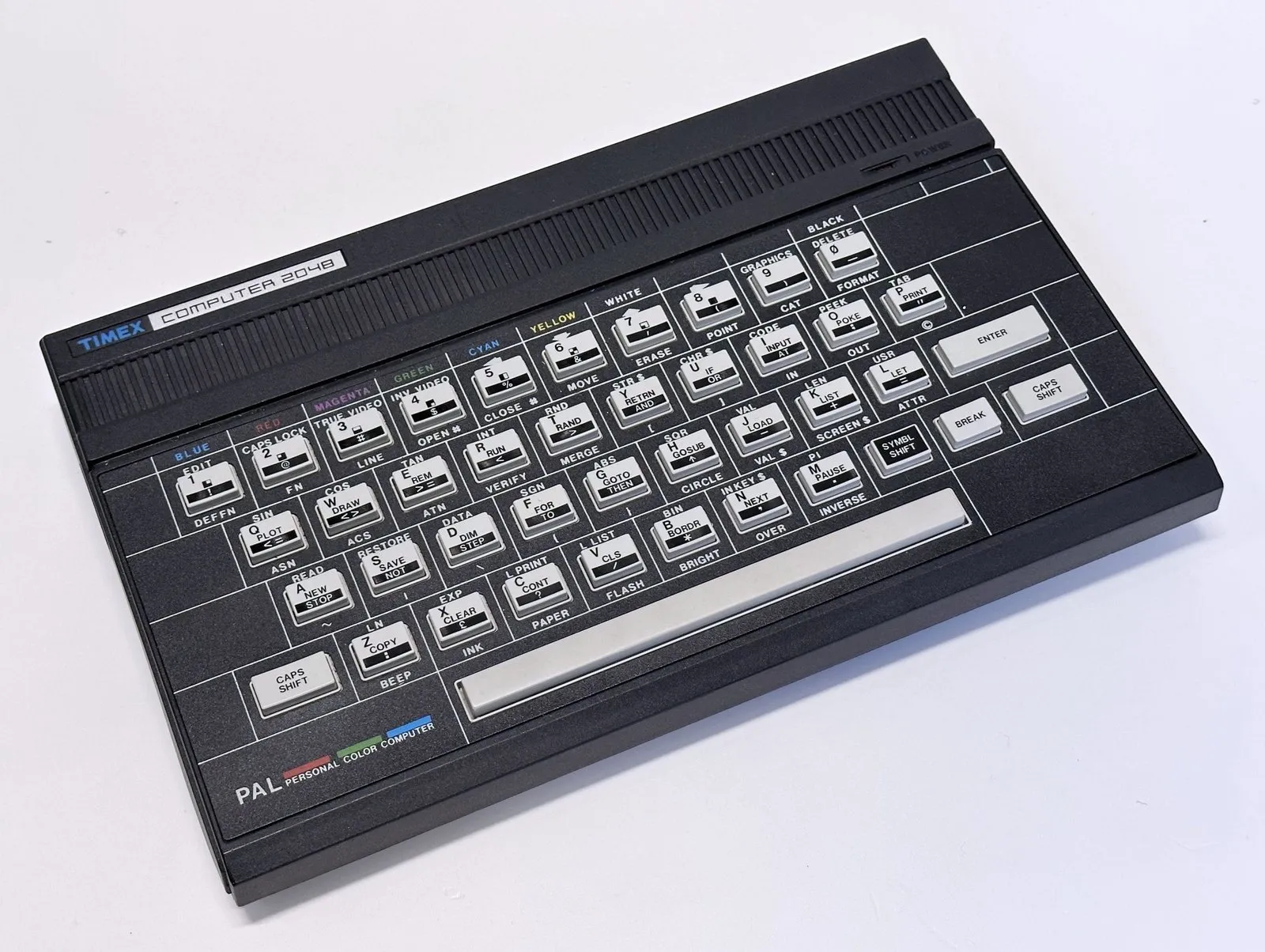
Timex Computer 2048 — a black case with a ventilation grille, the “TIMEX COMPUTER 2048” label and a keyboard with colour-coded command legends, angled view
SnC Museum · CC BY-SA 4.0 · Instagram @sncmuseum
1984

Timex TC2048

Timex Portugal · Portugal

A licensed Spectrum variant built by Timex Portugal for Europe: a Zilog Z80A at 3.5 MHz, 48 KB RAM, extended video modes and additional ports.

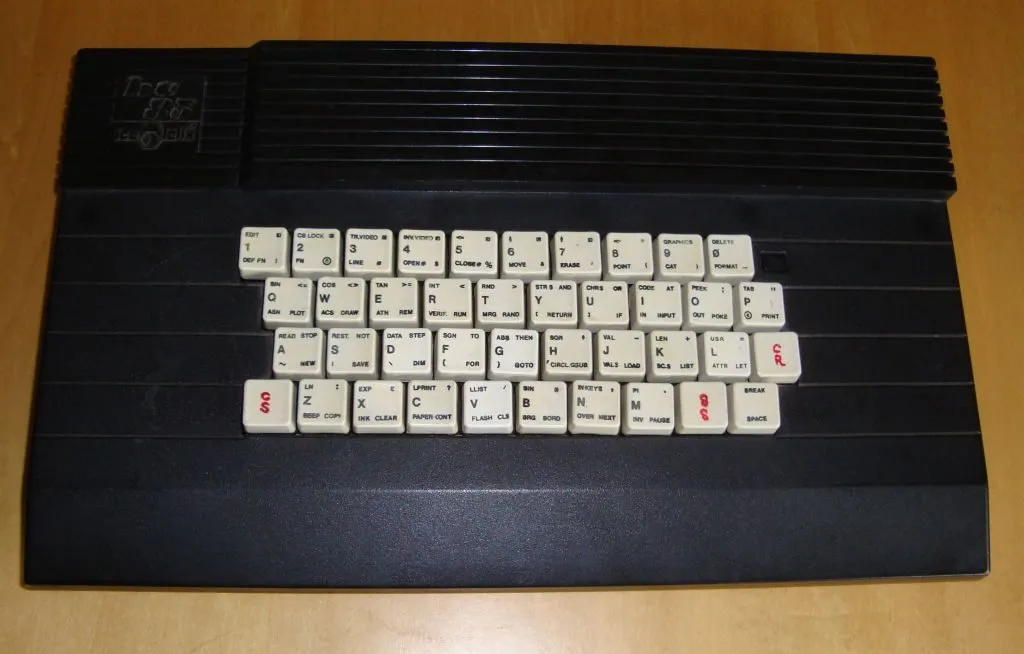
An HC-85 clone: a dark-grey case with ventilation ridges on the upper half, an embossed “ICE Felix” logo, cream keys with black-and-red BASIC legends. On a wooden table.
Dragoș Tolescu · CC BY-SA 3.0 · Wikimedia Commons
1985

HC-85

ICE Felix, Бухарест · Romania

A Romanian home Spectrum clone: a Z80A at 3.5 MHz (or the local MMN80CPU) and 64 KB RAM. Made by ICE Felix, Bucharest; used in education and by hobbyists.

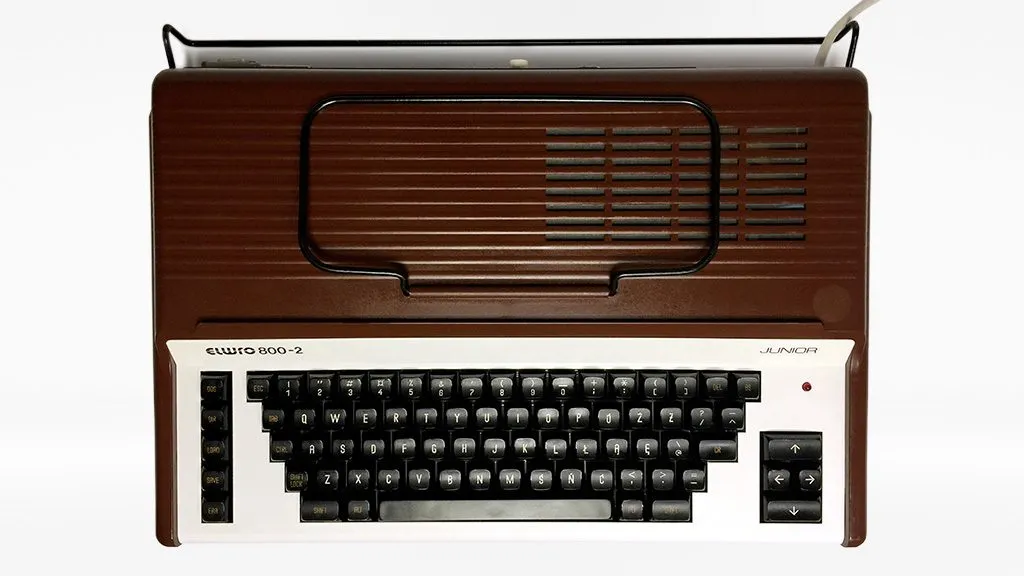
An Elwro 800-2 Junior clone: a brown case with a ridged lid, a white keyboard panel, dark keys, “elwro 800-2” and “JUNIOR” labels and separate cursor keys on the right.
Marcin Robert Kaźmierczak · CC BY 3.0 · Wikimedia Commons
1986

Elwro 800 Junior

Mera-Elwro, Вроцлав · Poland

A Polish Spectrum-compatible computer for schools: a Z80 (U880) at 3.5 MHz, 64 KB RAM and classroom-network support. Made by Mera-Elwro, Wrocław.

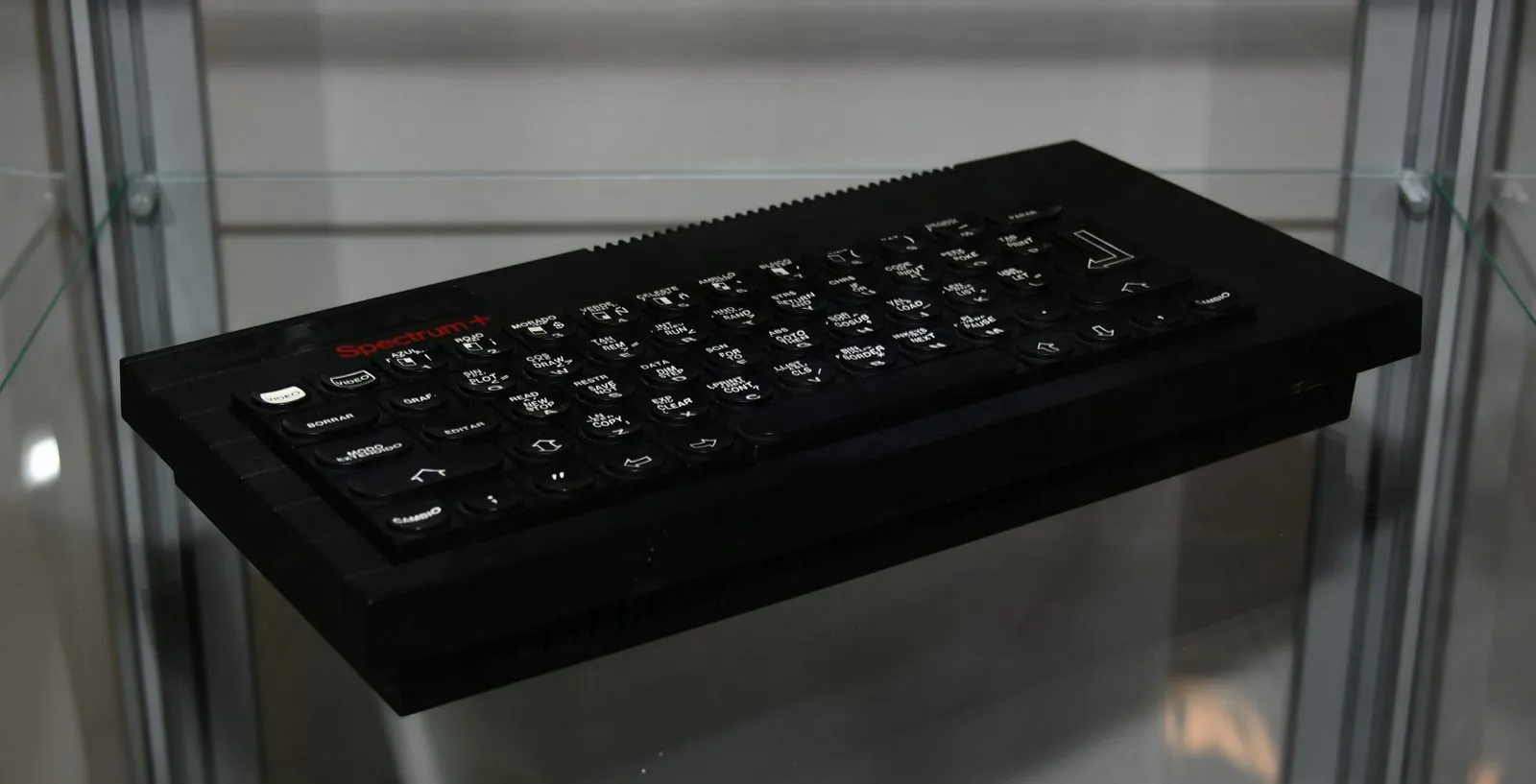
An Inves Spectrum + clone in a display case: a black ZX Spectrum+-style case, a red “Spectrum+” logo and Spanish key legends (BORRAR, EDITAR, VIDEO, CAMBIO), resting on a glass shelf.
Fernando Sáenz Perez · Public domain · Wikimedia Commons
1986

Inves Spectrum +

Investrónica · Spain

A Spanish ZX Spectrum+ clone with a redesigned board: a Z80 processor, 64 KB RAM (48 KB for the user) and a built-in Kempston joystick interface. Made by Investrónica.

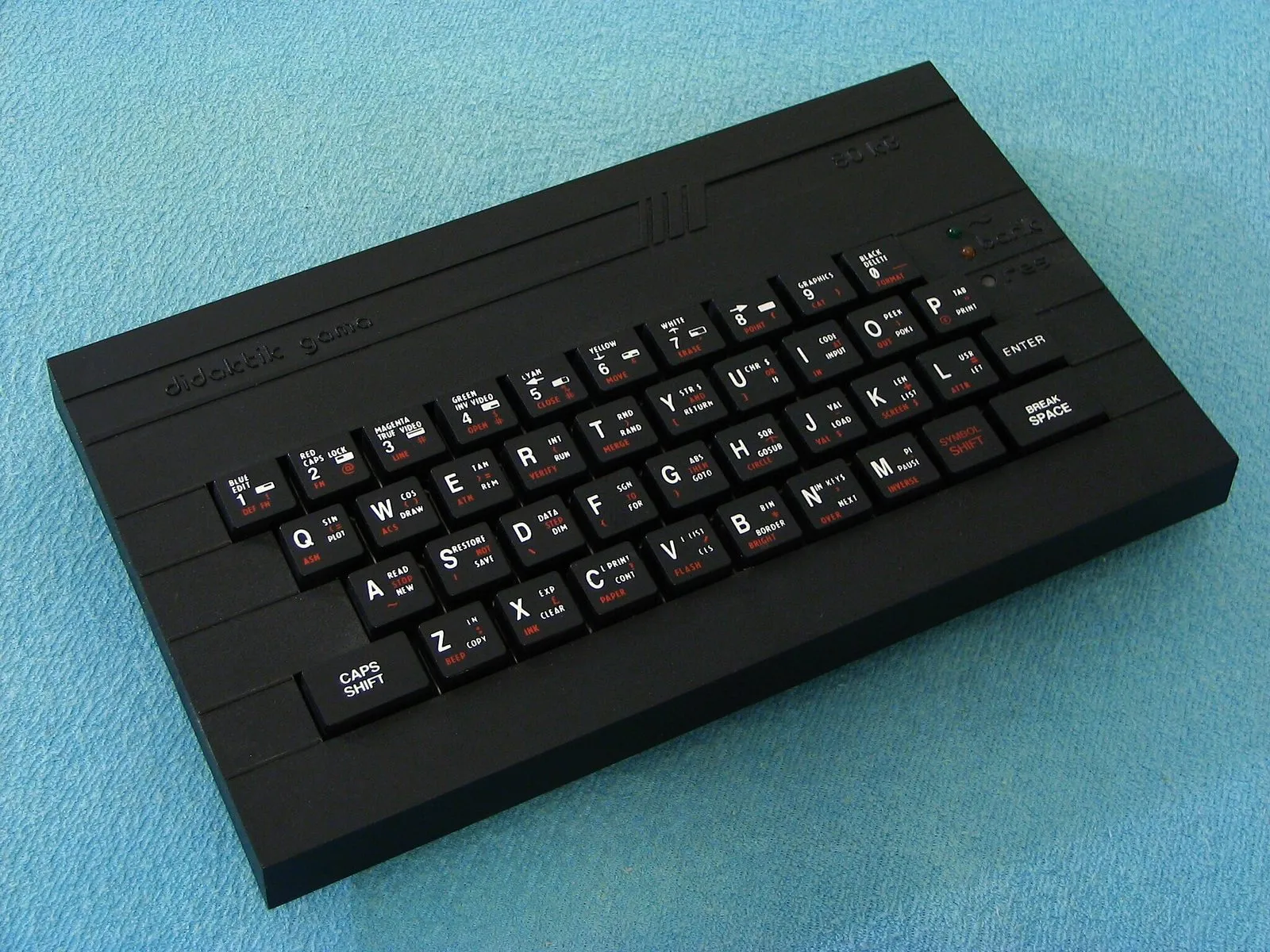
The keyboard of a Didaktik Gama clone: a black wedge-shaped case with black keys, red-and-white legends, and “didaktik gama” and “80 KB” markings on the panel.
Oldsoft · Public domain · Wikimedia Commons
1987

Didaktik Gama

Didaktik, Скалиця · Czechoslovakia

A Czechoslovak ZX Spectrum clone: a Zilog Z80 processor and 80 KB of RAM in two 32 KB banks. Made in Skalica.

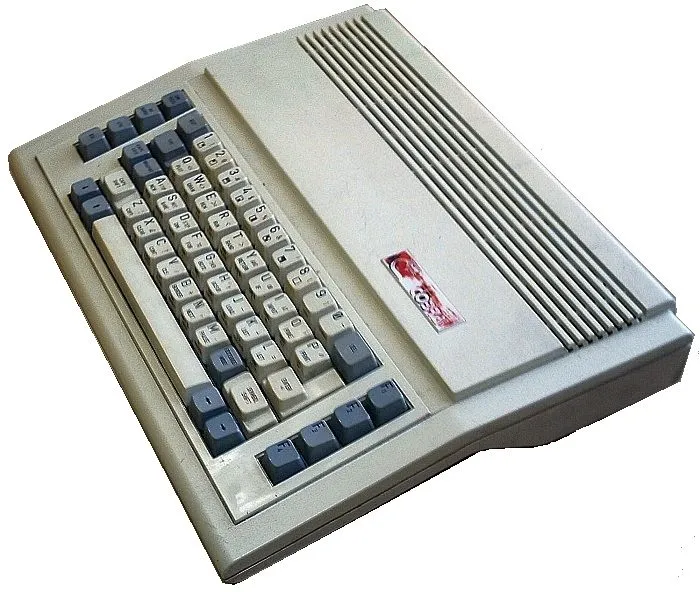
A CoBra clone: a cream case with ventilation ridges on the right half of the lid, a mechanical keyboard with white and grey keys and a small red-and-white sticker.
Alex:D · CC BY-SA 4.0 · Wikimedia Commons
1988

CoBra

ITCI, Брашов · Romania

A Romanian Z80 clone with 48 KB RAM (expandable to 80 KB); its name comes from “COmputer BRAșov”. It could run as a ZX Spectrum or under CP/M. Designed in 1986 at ITCI in Brașov; students widely built their own copies.

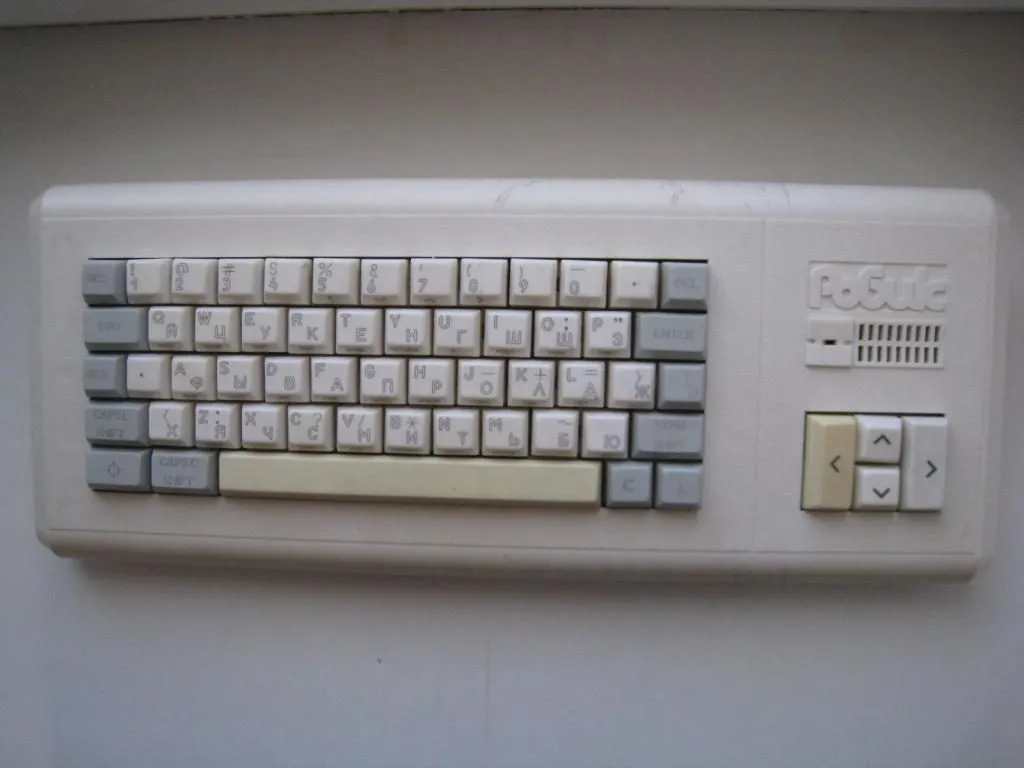
A Robik clone: a white keyboard-shaped monoblock with a “робик” logo and ventilation grille on the right, separate cursor keys, and keys carrying both Latin and Cyrillic letters.
SnC Museum · CC BY-SA 4.0 · Instagram @sncmuseum
1989

Robik

НВО «Ротор», Черкаси · Ukraine

A Ukrainian Spectrum clone: a Z80A, 48 KB RAM and a keyboard that switches between Latin and Cyrillic. Made by NPO “Rotor” in Cherkasy in 1989–1998 (over 73,000 units).

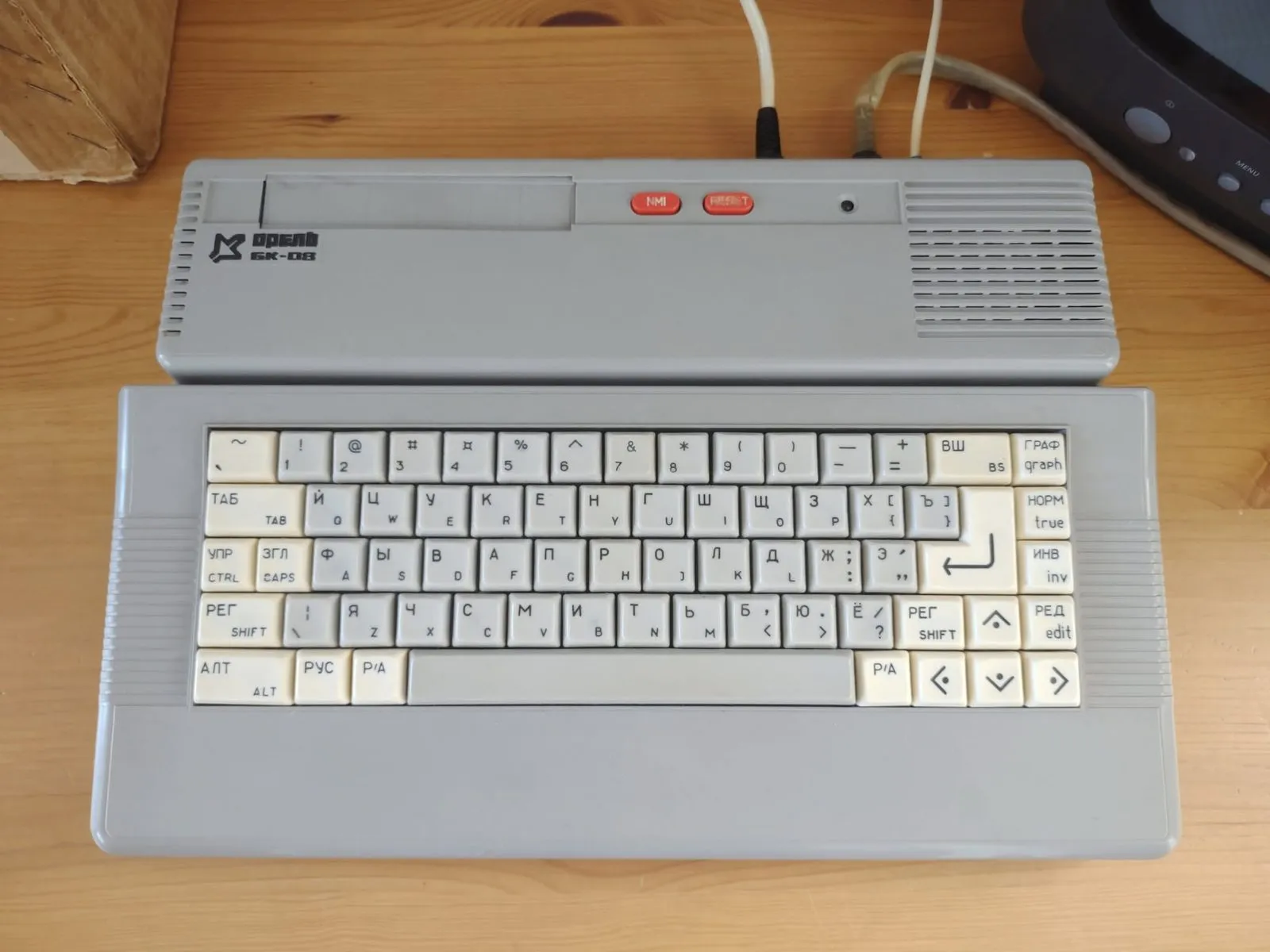
An Orel BK-08 clone: a two-part grey computer — a system unit with ventilation slots, red NMI and RESET buttons and an “орель БК-08” logo, and a separate keyboard with Latin-Cyrillic keys. A TV set sits behind it on a wooden table.
SnC Museum · CC BY-SA 4.0 · Instagram @sncmuseum
1989

Orel BK-08

Дніпровський машинобудівний завод, Дніпро · Ukraine

A Ukrainian ZX Spectrum clone built on TTL logic: a Z80A (or UA880A) at 3.5 MHz, 64 KB RAM with “shadow” ROM and an extended 67-key keyboard with several layouts. Released in 1989 at the Dnipro machine-building plant; produced into the mid-1990s.

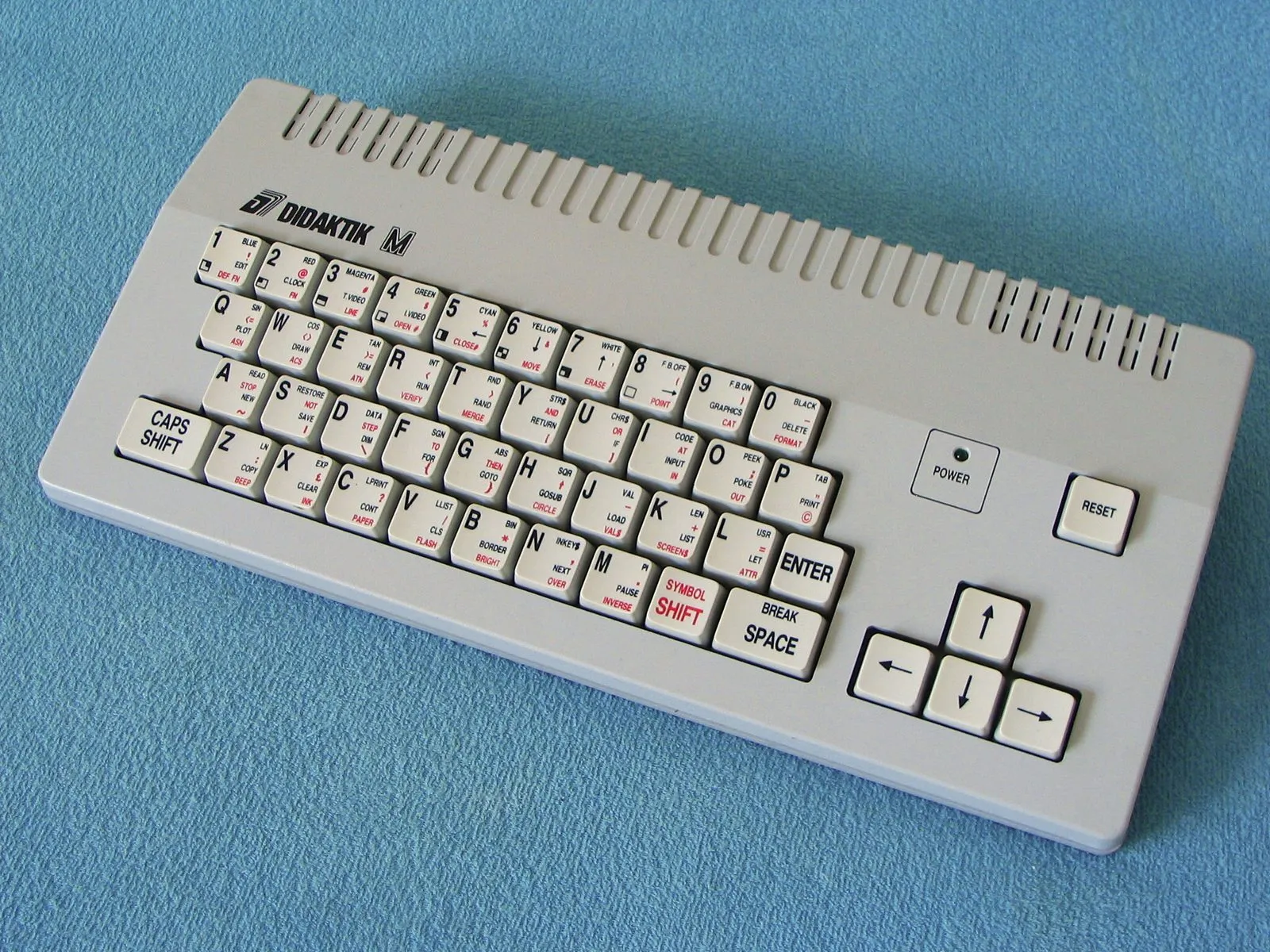
A Didaktik M clone: a light-grey case with ventilation slots at the back, white keys with black-and-red legends, a “DIDAKTIK M” logo, separate cursor keys and POWER and RESET buttons on the right.
Oldsoft · Public domain · Wikimedia Commons
1990

Didaktik M

Didaktik, Скалиця · Czechoslovakia

A later Czechoslovak Spectrum clone: a Zilog Z80 and 48 KB RAM. Made in Skalica and common in schools.

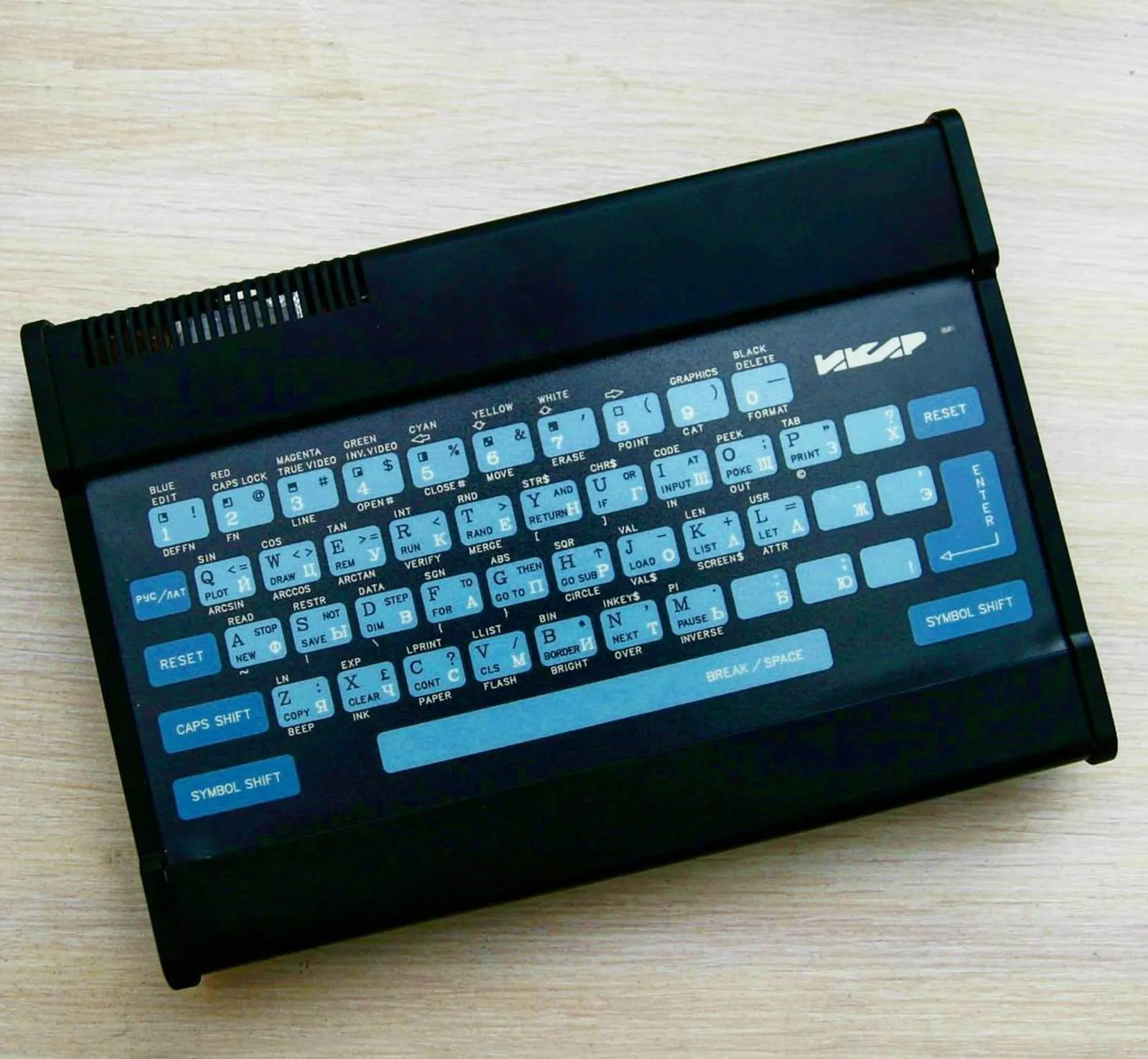
An Ikar-64 clone: a black wedge-shaped case with ventilation slots, a flat membrane keyboard with pale-blue keys, coloured BASIC legends and an “IKAR” logo on the right.
SnC Museum · CC BY-SA 4.0 · Instagram @sncmuseum
1991

Ikar-64

«Хартрон» (НВО «Електроприлад»), Харків · Ukraine

A Ukrainian ZX Spectrum 48K clone: built from discrete logic (~48 ICs), a 50-key membrane keyboard and a metal case. Released in 1991 in Kharkiv at the Khartron plant (NPO Elektroprylad); it displayed “**** IKAR-64 ****” on power-up.